What Does the Dutch Government Say About Your Digital Legacy? Frankly, Not Enough...
There are certain topics that almost everyone responds to in the same way: "Yes, I really should get around to that someday." Digital legacy is a perfect example. Notaries discuss it. Financial advisers and planners are increasingly asked about it by their clients. Social organizations are putting it on the agenda. And the Dutch government has also begun paying more attention to the subject. That is good news, but in my view, it is not enough. My advice is simple: don't wait, take responsibility yourself. Of course, you can always seek professional guidance where needed.
The Other Side of Digitalization
The way we live has changed dramatically over the past decade. We no longer store our memories solely in photo albums; increasingly, they live in the cloud and other digital environments. We manage our finances, insurance, and communications through digital platforms, and most of us now have dozens of online accounts and subscriptions that we use every day.
In short, a large part of our lives now exists digitally. And that has consequences for the people we leave behind when we're no longer here. Although our digital lives continue to grow, the way we think about what we leave behind has not kept pace. That is exactly what concerns me. It is why I keep asking the same question: the government is studying the problem, but practical solutions are still missing.
Will It Remain a Case of "To Be Continued?”
As early as 2021, the Dutch government commissioned an extensive study into the legal aspects of digital legacy. The conclusions were clear: current legislation no longer adequately reflects our digital society, and surviving relatives regularly encounter practical obstacles. When you read such a report, you naturally expect the next step to follow—a concrete action plan. Five years later, however, little has changed. There is still no clear public guidance for citizens or practical tools that enable people to take action immediately. Personally, I see that as a missed opportunity.
"Digital legacy isn't about conducting more research—it is about taking action!"
More recently*, the media once again highlighted the issue of digital legacy. That is valuable, because every conversation helps raise awareness. Still, one headline struck me as rather unsettling: "Attention for digital legacy is still lagging behind." My immediate thought was: "But practical solutions already exist." Major societal changes often begin with research. Then things tend to go quiet for quite some time. In my opinion, we're waiting too long. Our digital lives certainly aren't standing still. Please keep reading.
I Used to Think, "I'll Deal With It Later"
Perhaps I look at this topic differently from someone who approaches it purely from a legal or technical perspective. I was 54 when my father passed away. He had organized his estate exceptionally well. Everything was clear, well documented, and brought peace of mind to my mother—and to my brother, sister, and me. At that moment, I realized something that has stayed with me ever since: I had barely given any thought to my own estate, let alone my digital legacy. That was my real eye-opener.Confronting? Absolutely.
Enlightening? Even more so.
Today, I see it differently. You don't need another research report or legal theory. What matters is having the courage to ask yourself one simple question: What would I leave behind if something happened to me tomorrow? Apparently, many of us only start thinking about that after losing someone close to us. I suspect many people will recognize that feeling. We are often very good at organizing things for others, yet we keep postponing decisions about our own digital lives, until postponing is no longer an option.
A few months after my father's passing, I unexpectedly started working for Life After Me. Even today, it feels like a gift to dedicate myself to something that creates so much genuine human value.
Your Digital Life Is About Much More Than Passwords
When people hear the term digital legacy, they often think of passwords. But passwords are only a small piece of a much bigger picture. The real questions are much more personal. Does anyone know what truly matters to you? Where are your photos and videos stored? Which memories do you want to preserve? Which documents should remain accessible? Which subscriptions are still active? Which online accounts are important? What would you like to happen to your social media profiles? Would you like to leave something to a charity? And whom do you trust to handle all of this with care?
These are not technical questions, they are human ones. Ultimately, digital legacy is not about accounts or systems. It is about the things that have given meaning to your life and that you want to continue sharing with the people who matter most. That is why it is so important to arrange it in time.
A Will Is Essential—But It Doesn't Tell the Whole Story
A will remains a vital part of a well-organized estate. It provides legal clarity about who is responsible for what and records your wishes. But a will rarely tells anyone where your digital memories are stored. It doesn't contain your passwords. It doesn't provide an overview of all your online accounts. It doesn't explain which subscriptions need to be cancelled or what your personal wishes are regarding your digital life. That is why a will is not the finish line. It is the foundation, but many practical matters still need to be taken care of.
Equally important is having conversations with your loved ones in advance.
Even the best legal arrangements can lead to confusion if nobody understands what mattered to you or why you made certain choices.
As one notary once put it so well:
"I can draft the perfect will, but the family may still end up fighting each other once it's executed."
Ultimately, an estate is not just about putting everything in order. It is also about ensuring that the people you leave behind understand your wishes. I wrote more about this in an earlier blog: Is a Will Enough? Why You Should Also Organize Your Digital Legacy | Life After Me
Why Wait Until Someone Else Decides It's Important Enough?
It feels somewhat contradictory: the government wants to launch a public awareness campaign for something that, in my opinion, should simply be common sense. Of course, I am pleased that more and more organizations are paying attention to digital legacy. Every notary who raises the topic, every adviser who informs clients, and every organization that increases awareness helps people move forward. Initiatives such as the Digital Inclusion Alliance** also deserve recognition for promoting digital inclusion and raising awareness. But I also believe we should be careful not to mistake awareness for action.
You Can Start Today
The good news is that you don't have to wait for new legislation or a nationwide initiative before organizing your digital legacy. You can start today. Think about what truly matters to you. What you want to preserve. What you want to share. Whom you trust. What information your loved ones may need one day. That is precisely the idea behind Life After Me. It is not simply a place to store passwords or important documents. It is a secure environment where you can record what really matters: your legacy, memories, possessions, stories, wishes, and all the other information that deserves to be shared during your lifetime, or afterwards.
A Free Trial?
The Most Important Question Isn't What the Government Does, It's What You Do Today
I sincerely hope that, in the years ahead, digital legacy becomes a natural part of conversations about estate planning in the Netherlands. I hope legislation continues to evolve. I hope public education improves. And above all, I hope more people come to understand why this topic matters so much. To the organizations already working in this field, my message is this: keep talking to one another and keep the conversation going.
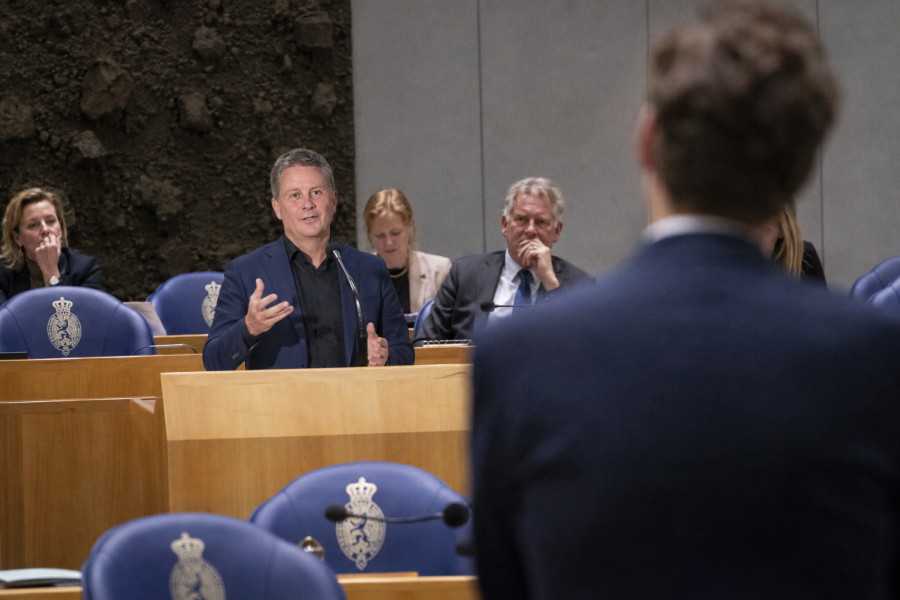
Perhaps it's time to organize a joint public debate. And while we're at it, let's invite Member of Parliament Barbara Kathmann*** as well.
Used sources: *Binnenlands Bestuur, **Aliantie Digitaal Samenleven en ***NOS.